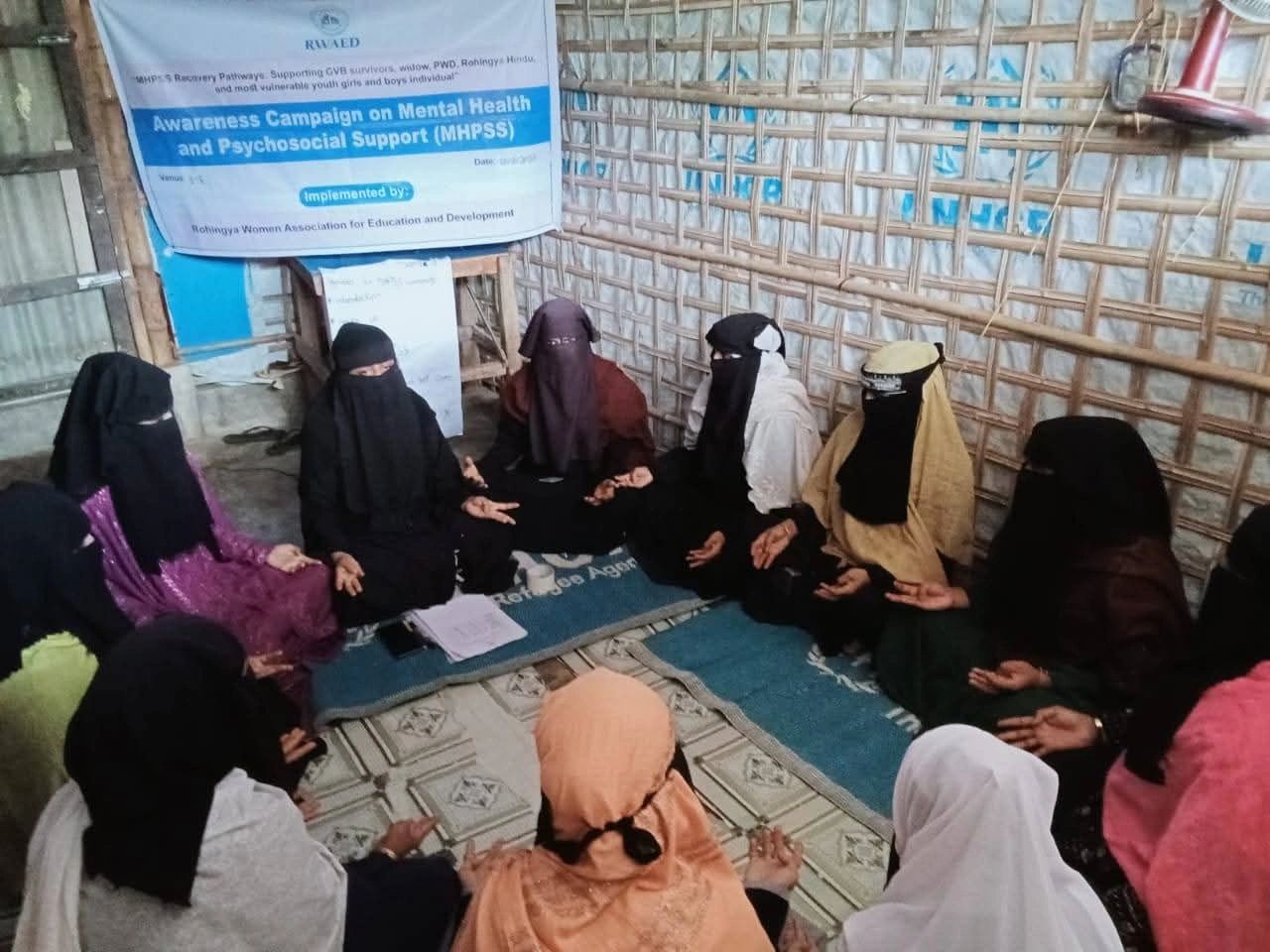
Mental Health Psychosocial Support (MHPSS) is prevalent in the world today as a way through which psychologists are helping individuals and communities recover from crises and adverse events. It’s much needed in the chaotic world of today—by refugees and others affected by conflict and disasters.
MHPSS includes support for dealing with interpersonal problems, emotional distress, and coping with difficult situations. It also covers support for mental health disorders like depression, anxiety, substance abuse. Interventions can be delivered at community, family, group, and individual levels.
Psychologists I have connected with are starting to understand how religious faith is an important feature that could be delivered with this kind of support.
The original Living Room was a Christian ministry, first started in 2006 with the unconditional love of Jesus as its foundation. Participants heard about the many Gospel stories of the acceptance and care Jesus showed for the marginalized of His day—those who had been rejected, stigmatized, and discriminated against. They heard messages specifically designed to meet their needs. Through these messages, they found the courage and strength to keep going, despite day-to-day struggles. They were encouraged in their faith and found encouragement and hope.
Attending meetings and socializing with others sharing the same faith and similar mental health concerns helped participants feel less alone. They felt understood in a way they could never be understood by people who had not experienced such emotional pain. Through the messages they heard at Living Room meetings, they experienced healing in a way they never could out in the world.
Today, Living Room continues to give support to individuals needing spiritual mental health care. But it differs because it now recognizes that spiritual needs are different for all. A person could be Christian, Muslim, Hindu, Buddhist, Jewish, or follower of some other religion with needs for the well-being their faith can offer them.
The historic Jesus and the unconditional love he is known for continues to be the foundation on which Living Room support groups rest. Jesus is the best example we have of love shown to all people, no matter what their cultural background. This love has brought healing to many and it continues doing so today. He showed special love for rejected people—for those the world had turned its back on.
During the chaotic world of conflict and displacement, numerous people have had to flee persecution and genocide. They end up in refugee camps, traumatized by their experiences, overwhelmed by depression, anxiety and grief. Psychologists who provide MHPSS are coming to the rescue in many parts of the world. Living Room spiritual mental health groups are starting to be recognized as something that could serve as an adjunct to this support.
I recently talked online to Binfa Kelvin Gono from Nigeria, a licensed clinical psychologist with extensive experience in leading the integration of Mental Health and Psychosocial Support (MHPSS) programs in both humanitarian and developmental contexts. He is with the International Committee of the Red Cross.
Binfa commented on my belief in the healing power available through religious faith:
“. . . religiosity is positively correlated with good mental health. And it is essential to contextualize MHPSS services to align with the culture and belief system of the people. Psychology acknowledges the significance of an individual’s belief system in the effectiveness of psychological interventions. During group sessions, we incorporate rituals such as prayers and trusting God with matters beyond our control. Participants frequently share how basic religious practices like prayer and meditation have been effective coping mechanisms for them. Thank you for sharing the incredible work you are doing to support people through the Living Room group approach.”
Through the Living Room support concept that I’ve been promoting globally I’m seeing that there are practical ways in which it can contribute to MHPSS and support groups of all kinds. It could be as simple as including one of the many devotional writings available on the Living Room website as part of meetings. There are over 250 of these, a form of spiritual “medication,” that anyone can download and use.
These devotional writings were written between 2013 and 2022, inspired by the healing God brought to my life of psychological pain. When I turned to Him, He filled me with His love, especially when I most needed it. Through my writings I was able to pass that love on to others who suffered as I did.
With the help of these writings, spiritual topics can be introduced by facilitators and discussed as a group. Through sharing the love of Jesus at Living Room participants can find mental well-being and healing of their emotional pain—no matter who they are, where they’re from, or how they worship.
marja
Leave a Reply