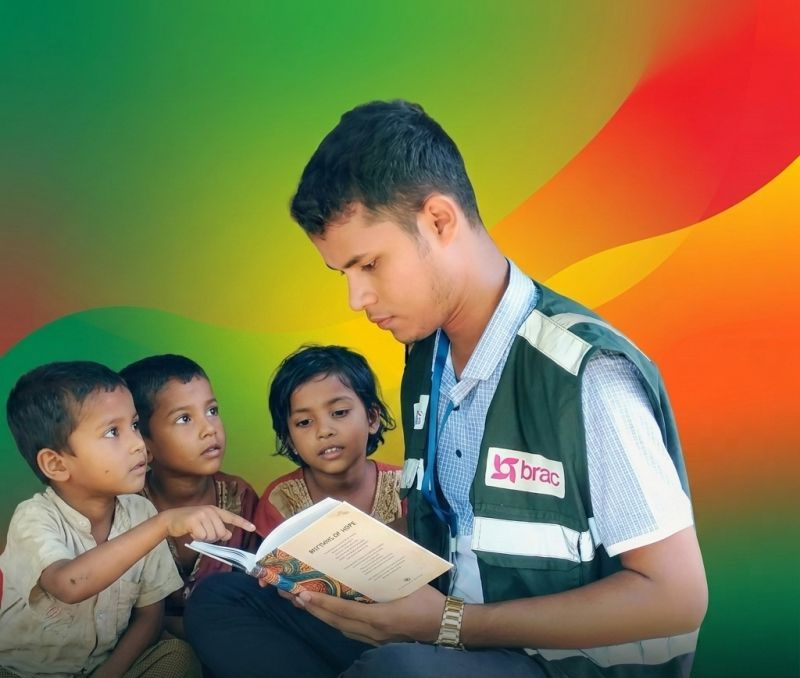
OMOR FAHAD’S STORY
Omor Fahad is a Rohingya genocide survivor whose life reflects both the historical suffering of his people and a strong commitment to community service.
Everyone knows about the important work done in this suffering world by humanitarians. But most overlook the fact that many refugees—individuals like Fahad—are humanitarians in their own right as they serve their brothers and sisters. They are not only refugees; they are human beings with dignity and strength.
In 2017, during the widely documented Rohingya genocide, Omor Fahad—then only 17 years old—was forced to flee his homeland due to violent military operations carried out by the Myanmar junta.
Only one year after arriving in Bangladesh, he joined the COAST Foundation under an education initiative supported by UNICEF. He became a Learning Center Teacher, contributing significantly to providing basic education to Rohingya children in the camps. He served in this role for over seven years, gaining valuable experience in humanitarian education.
Later, he expanded his work into the health sector by joining BRAC under its Health and Nutrition Project. He was appointed as a Community Health and Nutrition Worker (CHNW). In this role, he continues to support vulnerable populations by promoting health awareness, nutrition practices, and access to essential services within the refugee community.
Omor Fahad’s life journey—from surviving violence and forced displacement to becoming an active humanitarian worker—represents resilience, responsibility, and hope. His continued service in education and healthcare highlights his commitment to uplifting his community, even while he himself faces ongoing uncertainty and hardship.
Although I am a Canadian woman who has a different religious faith and come from a different culture, I have formed friendships with many Rohingya individuals. I am grateful for these friendships and I believe we all enjoy learning from each other.
Omor Fahad said: “I believe that respect, kindness, and humanity connect us as brothers and sisters, no matter our different faiths or backgrounds.”
About the importance of humanitarianism, he says:
“For me, humanitarian work means supporting education, hope, and resilience for vulnerable people, especially children and families. Serving humanity is important to me because I have lived through displacement and hardship. I believe true service to humanity is not only about providing help, but also about restoring dignity and giving people the opportunity to rebuild their lives with respect and hope.”
Wouldn’t it be wonderful if more of the world’s people would start having friendships like I have with the Rohingya? If only all of us could see each other as equals under the God we worship—accepting each other, respecting each other, learning about each other. Living as brothers and sisters in this big human family of ours.
It would be a pathway to peace.
marja
Leave a Reply